Author: gngadmin

  • Import documents checklist: what to prepare before your cargo reaches a Pakistani port

    Import documents checklist: what to prepare before your cargo reaches a Pakistani port

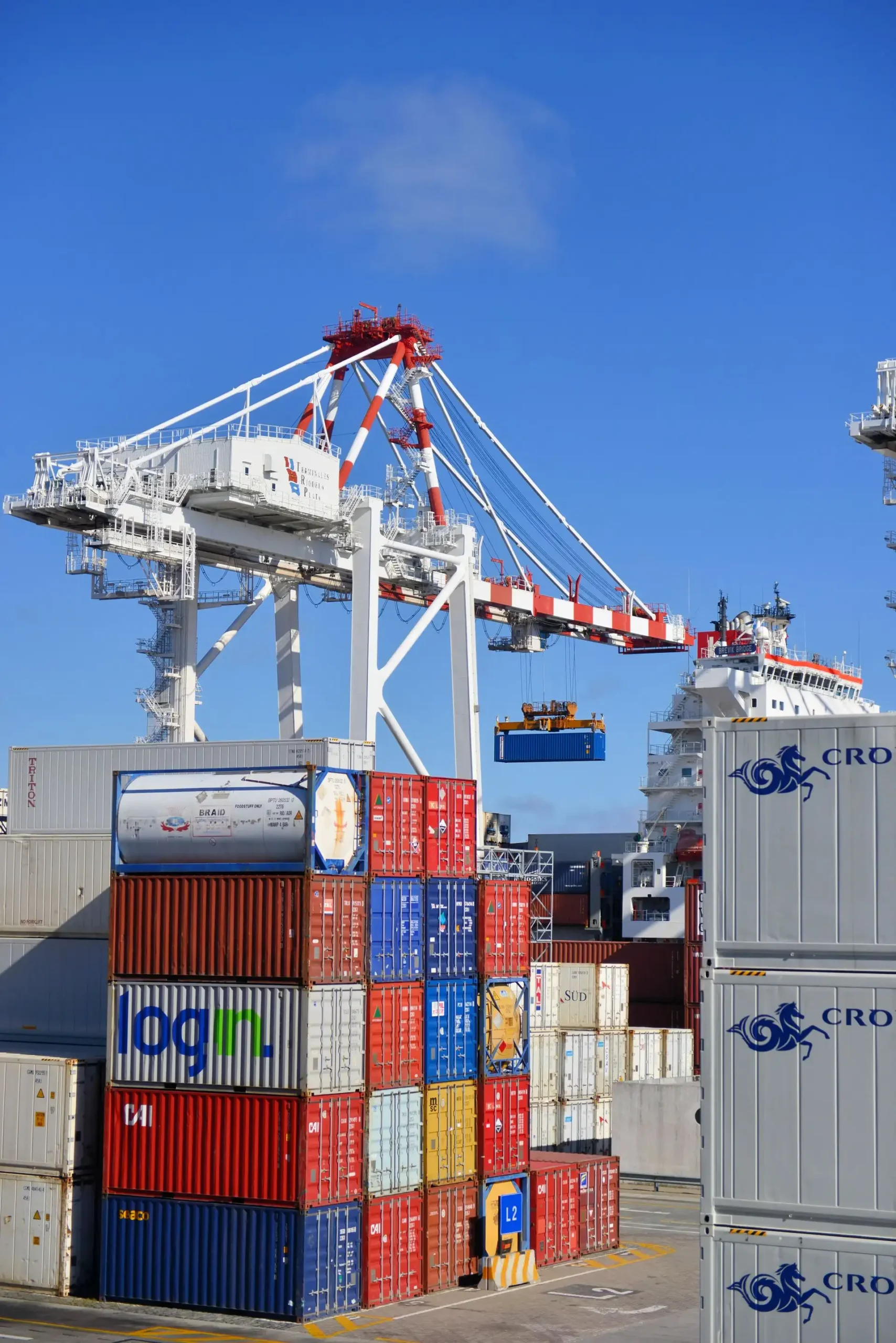
    Most clearance delays at Karachi Port, Port Qasim or a dry port have nothing to do with Customs being slow. They start weeks earlier, when a supplier sends an invoice with a vague description, a permit is applied for too late, or nobody checks the tariff code until the container is already sitting at the terminal.

    This checklist covers what an importer in Pakistan should have ready before the vessel or flight arrives, so the Goods Declaration can be filed early and the cargo can leave the port without extra storage and demurrage charges.

    1. Confirm your registrations first

    Before anything else, make sure the importing business is set up to clear goods in its own name.

    • NTN and sales tax registration: the consignee details on the shipping documents must match your FBR registration exactly.
    • Pakistan Single Window (PSW) account: commercial importers need an active PSW profile, which is linked to Customs and to your bank for the payment trail.
    • Licensed clearing agent: if a Customs House Agent files on your behalf, the agent needs to be authorised on your PSW profile before arrival, not on the day the ship berths.

    A small mismatch here, such as a different company name on the bill of lading, is one of the most common reasons a manifest line gets stuck.

    2. Get the commercial documents right

    Customs assesses duty on what the documents say, so they need to be complete and consistent with each other. Ask your supplier for these before the goods are shipped:

    • Commercial invoice with a clear description of each item, quantity, unit price, currency and the terms of sale (FOB, CFR or CIF).
    • Packing list showing package count, gross and net weights, matching the invoice line by line.
    • Bill of lading or airway bill with the correct consignee, notify party and port of discharge.
    • Certificate of origin, especially if you want a lower duty rate under a trade agreement such as the China Pakistan FTA.
    • Insurance details, since insurance forms part of the value Customs uses.

    Descriptions like “spare parts” or “accessories” invite questions. A good invoice says what the item is, what it is made of and what it is used for.

    3. Check the tariff code before the goods ship

    Every item is declared under an 8 digit Pakistan Customs Tariff (PCT) code. That code decides the customs duty, additional and regulatory duties, sales tax and withholding tax, and whether any permit is needed. Checking it in advance lets you know your landed cost before you commit to the deal, and avoids reassessment at the port. We explain how this works in our guide to HS and PCT code classification.

    4. Arrange permits and certificates in advance

    Some goods cannot be cleared on the commercial documents alone. Depending on what you import, you may need a no objection certificate or release from a regulator, for example for medicines, food items, chemicals, telecom equipment or used machinery. These approvals take time, and many are now requested through PSW. Apply as soon as the order is confirmed, not when the cargo lands.

    5. Know your free time at the terminal

    Shipping lines and terminals allow a limited number of free days before storage and container detention charges start. The number of days and the daily rates differ by line and terminal, so check them when you book. If documents arrive late, those free days are often used up before the declaration is even filed.

    6. Plan payment of duties and taxes

    Once Customs assesses the declaration, duties and taxes have to be paid before release. Keep funds ready in the account linked to your PSW profile so payment does not hold up the gate pass.

    What happens after the cargo arrives

    1. The carrier files the Import General Manifest (IGM) with Customs.
    2. Your clearing agent files the Goods Declaration using the documents above.
    3. The risk system routes it to a channel. Some consignments are released with little checking, others are cleared on documents, and some are selected for physical examination.
    4. Customs confirms classification and value and the duties are paid.
    5. Terminal and shipping line charges are settled, the delivery order is collected and the goods leave the port.

    When the paperwork is ready in advance, most of this can move quickly. When it is not, each step waits for the one before it.

    A simple checklist before arrival

    • Registrations and PSW profile active, clearing agent authorised
    • Invoice, packing list and bill of lading checked against each other
    • PCT code confirmed and duty estimate prepared
    • Permits or NOCs applied for, if the goods need them
    • Free days and terminal charges confirmed with the shipping line
    • Funds ready for duties and taxes

    Common questions

    When should I send documents to my clearing agent?

    As soon as the goods are shipped. That gives your agent time to check the tariff code, spot any mismatch and prepare the declaration before arrival.

    Can I clear goods without a clearing agent?

    Registered importers can file through PSW themselves, but most businesses use a licensed Customs House Agent because classification, valuation and examination queries need experience to handle quickly.

    Does this apply to dry ports and airports too?

    Yes. The documents and steps are largely the same whether goods arrive by sea, air or road, although the terminal and free time arrangements differ.

    Need a hand with your next shipment?

    Global Traders is an FBR licensed Customs House Agent. We check your documents before the goods arrive, confirm the tariff code and handle the declaration through to release. See our customs clearance service or send us your shipment details.
  • Duty drawback and the Export Facilitation Scheme: cutting import costs for exporters in Pakistan

    Duty drawback and the Export Facilitation Scheme: cutting import costs for exporters in Pakistan

    For an exporter, duties paid on imported raw materials are a cost that competitors in other countries may not carry. Pakistan has several ways to remove or refund that cost, but many businesses either do not know they qualify or give up because the paperwork looks complicated.

    This guide walks through the main options in plain language: duty drawback, the Export Facilitation Scheme, and concessionary or preferential duty rates.

    1. Duty drawback: getting duty back after export

    Duty drawback is a refund of customs duty paid on imported inputs that are later used in goods you export. The idea is simple: duty is meant for goods consumed in Pakistan, so when those materials leave the country inside an exported product, the duty can be returned.

    Drawback is provided for under the Customs Act, 1969 and the rules made under it. Refunds are worked out either on the actual duty paid on the inputs, or on fixed rates notified for particular export products. To claim, you generally need to show:

    • The import documents and proof that duty was paid on the inputs
    • The export documents for the finished goods
    • How much of the imported input went into each unit exported

    Separately, the government has run schemes such as Duty Drawback of Local Taxes and Levies for certain export sectors, which refund indirect local taxes rather than customs duty. Eligibility and rates are set through trade policy announcements, so check what currently applies to your product.

    2. Export Facilitation Scheme: not paying the duty at all

    Rather than paying duty and waiting for a refund, the Export Facilitation Scheme (EFS), introduced by the FBR in 2021, lets authorised exporters bring in inputs without paying duties and taxes up front. It was designed to replace older arrangements such as the Manufacturing Bond and DTRE.

    • Who can use it: manufacturer exporters, commercial exporters, indirect exporters and vendors who supply exporters, among others.
    • What it covers: raw materials, components, spare parts and in some cases machinery, whether imported or bought locally.
    • How it runs: the scheme is managed online through WeBOC and Pakistan Single Window, with authorisation of your input and output ratios before you start importing.
    • What you must do: use the inputs for exports within the allowed period and keep records, because compliance is checked after clearance through audits.

    For a business that exports regularly, EFS usually helps cash flow far more than drawback, because money is never tied up in duties in the first place.

    3. Exemptions and concessionary rates

    Some imports qualify for reduced or zero duty under the tariff schedules and notifications issued with each budget. These can apply to particular industries, machinery for new projects, or specific raw materials. The conditions matter: a concession may require a certificate from a sponsoring ministry, or apply only to a set quantity or end use.

    4. Preferential rates under trade agreements

    Pakistan has free trade and preferential trade agreements with several countries, including China. Goods that meet the rules of origin can enter at a lower duty than the normal rate. The key document is a valid certificate of origin issued in the agreed format, and it should be arranged with the supplier before shipping.

    Mistakes that cost exporters money

    • Not keeping input and output records, which makes a refund impossible to prove
    • Waiting too long to claim, when claims are subject to time limits
    • Using inputs under a scheme for local sales, which can lead to recovery of duty and penalties
    • Shipping goods from a preferential country without the correct certificate of origin

    Which option suits you?

    1. If you export regularly and import a lot of inputs, look at the Export Facilitation Scheme first.
    2. If you export occasionally, duty drawback on the duty you have already paid may be simpler.
    3. If you buy from a country Pakistan has an agreement with, check whether a preferential rate applies before you place the order.
    4. Whatever you choose, confirm the correct PCT code first, because every scheme depends on it. Our guide to HS and PCT codes explains why.

    Common questions

    Is duty drawback the same as a tax refund?

    Not exactly. Drawback refers to customs duty on imported inputs used in exports. Refunds of sales tax and local levies follow their own rules and schemes.

    Can small exporters use the Export Facilitation Scheme?

    Yes. The scheme was designed to include smaller businesses, including indirect exporters and vendors who supply larger exporters.

    Do the rules change every year?

    Rates, concessions and procedures are often revised in the federal budget and through FBR notifications, so it is worth reviewing your position at least once a year.

    Talk to someone with a banking background

    Our team combines customs work with more than 20 years of experience in banking and trade finance. We can help you work out which scheme fits your business and handle the paperwork. See our import and export consultancy and trade and risk advisory services, or get in touch.

  • HS code vs PCT code in Pakistan: how customs classification works

    HS code vs PCT code in Pakistan: how customs classification works

    If you import or export anything in Pakistan, one number decides most of what you pay at the port: the tariff code. Get it right and your duty estimate holds. Get it wrong and you may face a reassessment, a delay, or in serious cases a penalty for misdeclaration.

    This guide explains what HS and PCT codes are, how goods are classified, and what you can do to avoid problems.

    What is an HS code?

    HS stands for the Harmonized System, a product classification maintained by the World Customs Organization and used by most countries in the world. It sorts every kind of goods into 21 sections and 97 chapters, then into headings and subheadings. The first six digits of a code are the same in every country that uses the system. For example, heading 85.07 covers electric accumulators (batteries) wherever you are.

    What is a PCT code?

    Pakistan builds on the six digit HS code and adds two more digits for national purposes. The result is the 8 digit Pakistan Customs Tariff (PCT) code, written like 8507.2090. Those extra digits let the government set different rates for closely related goods, so two products under the same HS subheading can carry different duties in Pakistan.

    Why the code matters so much

    The PCT code is used to work out almost everything Customs applies to your shipment:

    • Customs duty, plus any additional or regulatory duty
    • Sales tax and withholding income tax at import stage
    • Whether a concession or exemption applies
    • Whether a permit, NOC or certificate is needed before release
    • Import or export restrictions on the item

    Because of this, the code affects your landed cost, your timeline and your compliance record at the same time.

    How classification actually works

    Classification is not a matter of picking the code that looks closest or carries the lowest duty. It follows the General Rules for the Interpretation of the Harmonized System, applied in order. In simple terms:

    1. Start with the wording of the headings and any section or chapter notes.
    2. Look at what the item is made of, how it works and what it is mainly used for.
    3. If an item could fit more than one heading, the rules decide which takes priority, for example the most specific description or the material that gives the item its essential character.
    4. Only then move down to the subheading and the national 8 digit line.

    Sets, mixtures, parts and multi purpose machines are where most disagreements happen. A part that is only suitable for one machine can be classified differently from a general purpose part, and a product with several uses can land under an “other” line rather than a specific one.

    What happens when there is a dispute

    If Customs and the importer disagree on a code, the matter can be referred to the Classification Committee at the Custom House, which hears both sides and issues a decision based on the classification rules and the documents provided. Those decisions are product specific, and appeals go to the FBR. Valuation rulings for particular goods are also issued and published from time to time, so it is worth checking whether your product is already covered.

    Common mistakes that cause trouble

    • Copying the supplier’s code. The exporter’s code is often based on their own country’s tariff and may not match the Pakistani 8 digit line.
    • Vague invoice descriptions such as “parts” or “machine accessories”, which make the correct code impossible to confirm.
    • Using last year’s code without checking. Rates and national lines change through the Finance Act and notifications.
    • Choosing a code for the lower duty rather than the correct one, which can lead to recovery of the difference and penalties.

    How to get it right

    1. Ask your supplier for a full technical description, material composition and a product photo or datasheet.
    2. Confirm the 8 digit PCT code before the goods are shipped and calculate the duty in advance.
    3. Keep a record of how you classified each item, so future shipments are consistent.
    4. If the product is unusual or expensive, get professional advice before you place the order.

    Common questions

    Is the HS code the same as the PCT code?

    The first six digits are the same. The PCT code adds two national digits, so always declare the full 8 digit code in Pakistan.

    Can the code for my product change?

    The international structure is updated every few years and Pakistan adjusts national lines and rates through its budget and notifications. Check your codes at least once a year.

    Who is responsible if the code is wrong?

    The importer or exporter is responsible for the declaration, even when an agent files it. That is why it helps to work with an agent who checks the code rather than simply copying it.

    Let us check your codes

    Our team confirms the PCT code and duty for each item before your goods arrive, so there are no surprises at assessment. Find out more about our customs clearance and regulatory compliance services, or ask us about a specific product.